
 < BACK TO PROJECTS
This project aims at gathering evidence of pollution from illegal gold mining in Ecuador’s San Lorenzo and Eloy Alfaro cantons to support legal action to protect local communities and initiate an international advocacy campaign against gold laundering.
The cantons of San Lorenzo and Eloy Alfaro, located in the province of Esmeraldas, northern Ecuador, are home to approximately 200,000 people across 60 communities. The majority of the population consists of indigenous groups and Afro-descendants, many of whom face limited access to basic services, economic opportunities, and education. Esmeraldas remains one of the most impoverished and disadvantaged areas of the country.
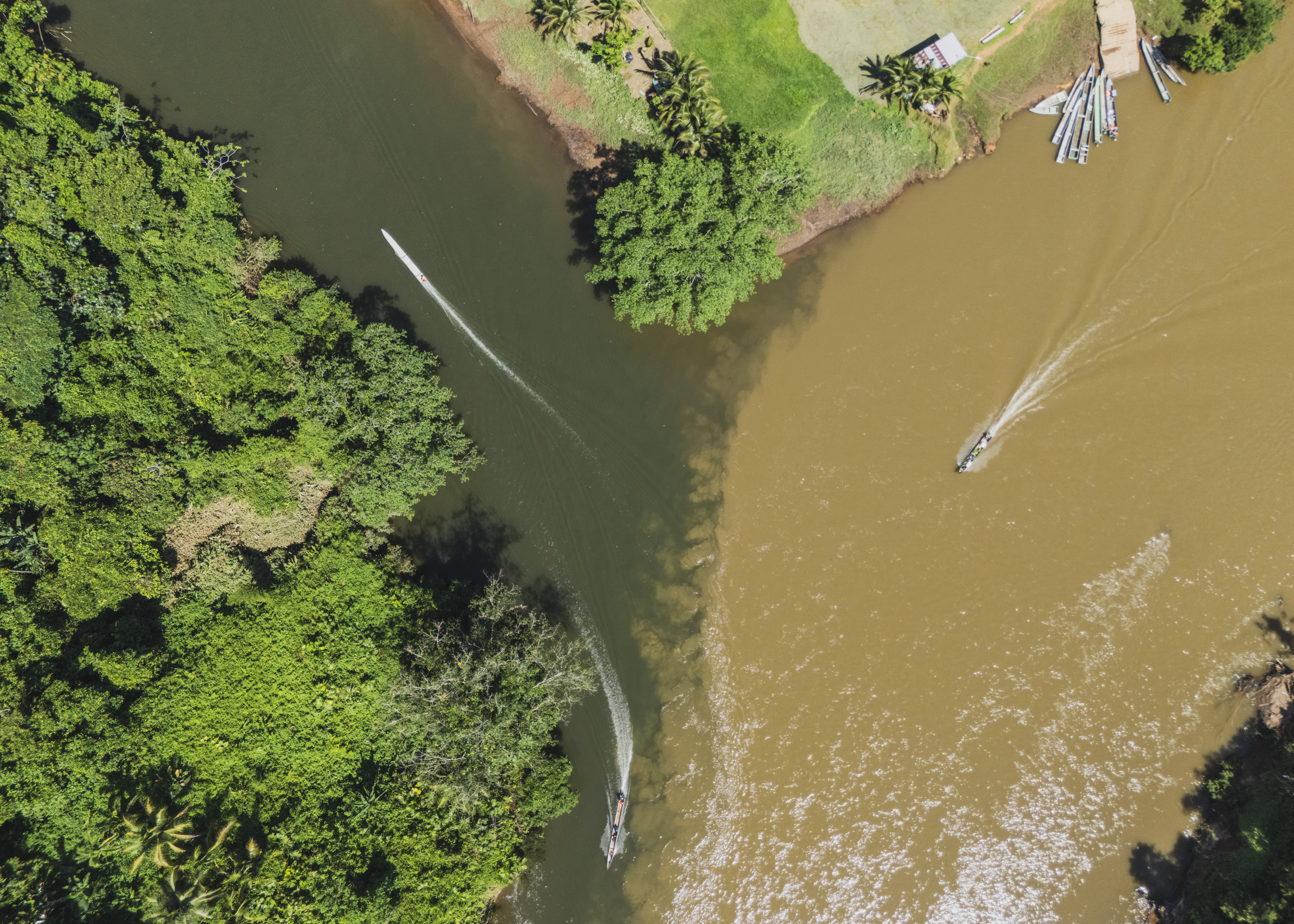
This region also grapples with severe environmental challenges, notably the expansion of palm oil plantations and illegal gold mining. Since the early 2000s, unauthorized small-scale gold extraction has intensified in the area largely driven by illicit trafficking from Colombia. These activities have taken over local rivers, contaminating the water sources relied upon by the local communities.
In response to this crisis, in 2011, the “Defensoría del Pueblo” (Ombudsman's Office) requested the Ecuadorian government precautionary measures to regulate mining activities in the area. These measures imposed a complete halt to mining activities and suspended new concessions, and were further expanded in 2018 by imposing the actuation of remediation measures. However, throughout this period, authorities failed to enforce compliance, allowing illegal mining to resurge. The situation worsened further during the COVID-19 pandemic and as global gold prices soared. In 2022, a compliance evaluation hearing led to the transformation of the precautionary measures into a “Acción de Protección” (Protection Action), thus necessitating a new hearing. Although the latter has not yet been scheduled, Acción Ecológica, one of Ecuador's leading environmental organizations, has repeatedly submitted letters urging action.
Building on previous bottom-up monitoring efforts, the project aims to protect the environmental rights of local communities, strengthen legal accountability, and contribute to a global effort to fight against environmental crimes. In particular, we will:
• Gather evidence – We will gather independent evidence of environmental pollution caused by illegal gold mining in the canton of San Lorenzo and Eloy Alfaro. This task will be carried our with the support of the local association Fundación Manos de Dios Redentor and will integrate past results from local monitoring initiatives.
• Support legal actions – Acción Ecológica will use this data to file an “Acción de protección” (Protection Action) in the Court of San Lorenzo. This initiative seeks to compel the Ecuadorian State to enforce control measures, withdraw illegal mining operations, and initiate environmental restoration efforts.
• Support international advocacy against gold laundering – This data will also be employed in international advocacy efforts against gold laundering, shedding light on the global networks that enable illicit gold trade. This action will be carried out in collaboration with the Organized Crime and Corruption Reporting Project.
This project is supported by the Better Way Foundation and other donors.
In November 2024, we conducted a first field campaign in collaboration the Fundación Manos de Dios Redentor. Sampling took place across 16 locations in the cantons of San Lorenzo and Eloy Alfaro (see the blue points in the map below). These sites were selected for their relevance to the project’s objectives and because they were object of previous investigations. At each location, we measured water quality parameters and collected surface water samples and sediments for further analysers.

Back to Italy, we sent the samples to an accredited laboratory for the quantification of 21 metals and total cyanide. The results showed elevated levels of cyanide in surface waters collected from the Santiago River watershed, a mining-rich area. In all cases, cyanide concentrations exceeded the Ecuadorian limit for the protection of aquatic life (10 µg/L). In one sample collected in the Cachabí River (site 2), cyanide was 200 µg/L, surpassing also the national standard of water for domestic and human use (100 µg/L). Cyanide is commonly used in small- and medium-scale mines to extract gold, and similar concentrations have been observed in other areas of Ecuador.

For a full account of our results, take a look at our report below.
In May 2025, at the end of the wet season, we went back to the field to collect additional data. We sampled approximately the same sites of the previous campaign, plus a few additional locations.
The new findings corroborated the from previous investigations. While cyanide concentrations in water were below Ecuadorian regulatory limits during this campaign, they had the same geographic distribution observed in November 2024 – suggesting persistent upstream sources linked to mining activities. Furthermore, aluminum in water exceeded the Ecuadorian standards for the protection of aquatic life at 7 sites, with a spatial distribution mirroring that of cyanide. Mercury also consistently exceeded the Canadian Probable Effect Level at multiple sites.
For a full account of our results, take a look at our second report (available soon).


